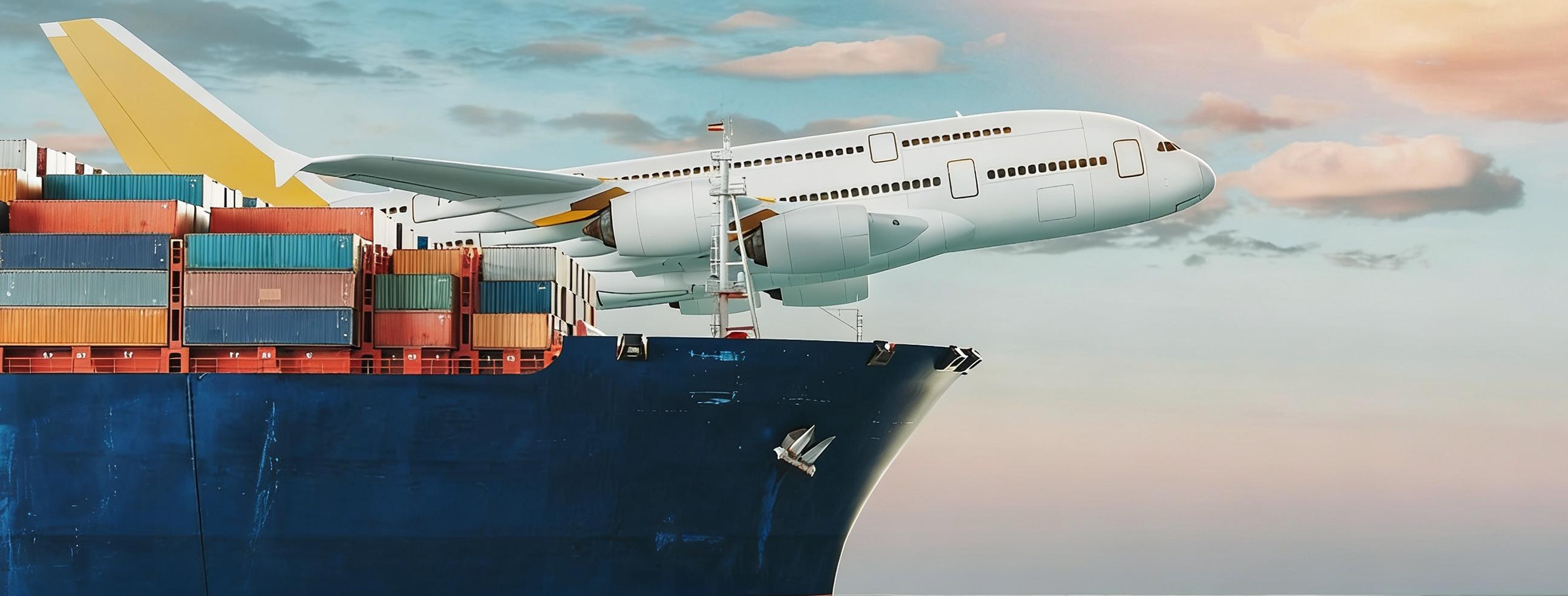

Air Freight vs Sea Freight: A Complete Guide to Choose the Right Mode
International shippers often face a key logistics dilemma: air freight or sea freight? Choosing between shipping by air or by ocean means balancing speed against cost, among other factors. On one hand, air freight offers fast, time-sensitive delivery with robust security measures. On the other hand, sea freight is cost-effective for moving large or heavy shipments over long distances. Both modes have distinct advantages and limitations. In this guide, we’ll break down the key differences between air and sea freight – including transit times, costs, capacity, environmental impact, safety, and restrictions.
What Are Air Freight and Sea Freight?
Air freight refers to transporting goods via aircraft. Shipments fly between airports, making air transportation the fastest mode for long-distance shipping. Air freight is ideal for urgent, high-value, or perishable goods, as it can deliver within days globally. However, this speed comes at a higher cost per kilogram and with limitations on cargo size and hazardous materials.
Sea freight involves shipping goods in containers by cargo ships across oceans. It’s significantly slower – often taking several weeks for intercontinental routes – but is far more economical for large volumes. A single ocean container can carry massive quantities of cargo at a lower unit cost than air. Sea freight is the backbone of global trade for bulk goods, but it requires more lead time and involves additional handling (port operations, customs, and inland transport from the port).
Quick Comparison: Here’s an at-a-glance comparison of air vs. sea freight on key factors:
| Factor | Air Freight | Sea Freight |
|---|---|---|
| Speed | Very fast – international delivery in days. | Slow – delivery in weeks (e.g. 4–6 weeks common). |
| Cost (per weight) | High cost (several times cost of ocean). | Low cost per unit, best for large shipments. |
| Capacity per shipment | Limited space (airplanes carry smaller volumes). | Huge capacity (ships carry thousands of containers). |
| Shipment Size Best Suited | Small, light, high-value or urgent shipments. | Large, heavy, bulk or non-urgent shipments. |
| Route & Flexibility | Many flights and routes; frequent departures. | Fewer sailings; need trucking/rail from seaport. |
| Reliability | Very reliable schedules; minimal delays generally. | Weather, port delays can affect schedules more. |
| Environmental Impact | Higher emissions (fuel-intensive). | Lower emissions per ton (more eco-friendly). |
| Restrictions | Strict limits on hazardous or special goods. | Fewer commodity restrictions (can ship most goods). |
Next, we’ll dive deeper into each of these aspects to understand when air vs. sea freight makes sense for your shipment.
Cost and Budget Considerations
One of the biggest differences between air and ocean shipping is cost. Air freight is significantly more expensive than sea freight on a per kilogram or per cubic meter basis. Various analyses show that shipping by air can be 5–10 times costlier than shipping by sea for the same weight. In fact, one study suggests air freight might run 12–16 times the cost of ocean for equivalent cargo. This premium reflects the speed and fuel costs of air transport – jet fuel and airport operations drive up price, whereas ocean vessels achieve economies of scale.
For example, a modest shipment of ~85 kg might cost around $400 by ocean (LCL) but about $600 by air, in exchange for much faster delivery. At larger scales, the gap widens: a shipment that might cost $195 by sea could cost $1,000 by air. Generally, if air freight charges would exceed ~15–20% of your product value, it may erode your profit, so ocean freight is preferable in such cases.
However, shipment size plays a role. For very small shipments (say a few boxes under 1 cubic meter or around 100 kg), air freight can sometimes be as affordable as LCL sea freight, or even cheaper. This is because sea freight has minimum fees, plus destination port and handling fees that don’t scale down well. In short, air is cost-effective for small, urgent loads, whereas ocean wins on larger shipments where the weight/volume is high and transit time is less critical.
Tip: When budgeting, don’t forget ancillary costs. Air freight quotes often include airport handling and fuel surcharges, while sea freight quotes might include port fees, container handling, and surcharges like BAF (Bunker Adjustment Factor for fuel) or insurance.
Transit Time and Speed
Speed is the clear advantage of air freight. If you need goods in a hurry, air transportation is the fastest option – international air shipments usually arrive in 1–5 days, depending on distance and connections. By contrast, ocean freight transit times are measured in weeks. A typical door-to-door ocean shipment might take 4–6 weeks (or more) to reach its destination. For example, shipping from East Asia to Europe or North America by sea often takes a month or longer port-to-port, plus extra time for inland transport to the final destination.
Air freight’s speed can be critical for time-sensitive goods: seasonal fashion, perishable foods, pharmaceutical supplies, or parts needed urgently to prevent a factory line shutdown. In these cases, the premium for speed is justified. Air cargo can also reach landlocked or remote areas more directly – planes fly to many cities, whereas ocean freight only goes port-to-port and then relies on trucks or rail for final delivery. Missing a scheduled sailing by sea could mean waiting days or a week for the next ship, whereas flights depart daily or even multiple times a day on popular routes, giving more flexibility if you’re on a tight schedule.
That said, ocean transit has improved in recent years. Express LCL services are now offered by some carriers and forwarders, providing faster handling and even guaranteed delivery dates for less-than-container loads. These expedited ocean services can sometimes deliver in half the time of regular sea freight and narrow the gap with air shipping on certain routes. For relatively high-value products that aren’t urgently needed in a day or two, an expedited ocean service might be a viable middle ground – far cheaper than air, yet only marginally slower. Still, standard ocean freight remains much slower than air, so if your supply chain can’t spare the extra transit time (or is at risk of stockouts), air freight is the safer bet. In short, choose air freight when lead time is critical or deadlines are fixed. If you can afford a longer lead time and build inventory cushion, sea freight offers huge cost savings.
Cargo Volume and Capacity Differences
Another major difference is how much cargo you can move in one go. Sea freight offers vastly greater capacity than air. The largest modern container ships can carry over 24,000 TEUs (20-foot equivalent containers) on a single voyage. To put that in perspective, one standard 20-foot container has about 1,170 cubic feet of space – meaning a ship like that hauls tens of millions of cubic feet of goods. Even typical cargo vessels easily carry thousands of containers.
By contrast, aircraft cargo holds are much smaller. One of the largest cargo planes, the Boeing 747 freighter, has a maximum cargo volume around 26,000 cubic feet. That’s only about as much as 22 standard 20-foot containers (a tiny fraction of a single ship’s load). Moreover, airplanes have strict weight limits. Heavy or oversized pieces might not fit on a plane at all.
What this means is air freight is best for smaller shipments, whereas ocean freight handles bulk volumes more efficiently. If you need to move a full warehouse worth of goods or very heavy machinery, ocean is really the only practical choice. Sea freight is literally built for larger shipments – whether it’s multiple pallets of products, manufacturing equipment, or raw materials, you can load it into a container (or use multiple containers) and send by ship. Air freight, on the other hand, is commonly used for palletized goods, cartons, or crates that are within size limits. High-volume shippers often find air freight cost-prohibitive except for initial lots or special urgent stock.
Environmental Impact: CO2 Emissions of Air vs Sea
Sustainability is an increasing concern in logistics. Here, sea freight has a clear advantage in carbon footprint. Shipping by ocean is far more fuel-efficient per ton of cargo. Studies indicate that cargo ships emit only 10–40 grams of CO₂ per metric ton of freight per kilometer, whereas air freight emits roughly 500 grams per ton-km. In other words, transporting the same cargo by air can produce 20 to 50 times more greenhouse gas emissions than by sea, a staggering difference.
Why the huge gap? Simply put, airplanes burn a lot of jet fuel to stay aloft and move quickly, while ships move slower and can carry massive loads, achieving economies of scale. The longer transit and larger capacity of ships mean much lower emissions intensity. Sea freight is the greener choice for reducing your supply chain’s carbon footprint. In fact, many companies are now weighing sustainability alongside cost and speed when choosing modes.
That said, both industries are improving. New regulations effective 2024 require ships to meet stricter carbon emission standards or offset their emissions, pushing the maritime sector to become even more eco-friendly. Airlines are also exploring Sustainable Aviation Fuels (SAF) and better aerodynamics to cut emissions. But in current practice, if minimizing CO2 is a priority, shipping by sea wins by a large margin.
Security, Risk and Cargo Safety
When it comes to the safety of goods in transit, both air and sea freight have their pros and cons, and the “safest” mode can depend on the nature of your cargo. Air freight is sometimes touted as more reliable and secure – shipments spend less time in transit, and airports have strict security measures and monitoring in place to prevent theft or tampering. Air cargo is loaded and unloaded fewer times, and handling is often gentler. If you’re shipping high-value electronics or fragile items, the controlled environment of air freight and shorter transit can lower the risk of damage.
However, this doesn’t mean ocean freight is “unsafe.” Ocean shipping is quite secure for the right types of goods. Cargo shipped by sea is typically packed in sealed, durable containers, which provide a protective shell against the elements and reduce handling of individual items. Once your container is sealed at origin, it isn’t opened until it reaches the destination (unless inspected by customs). This limits pilferage and damage – essentially your goods are locked in a steel box for most of the journey. For large, robust items or well-packaged goods, sea freight can be very safe. The risk of damage is low if proper packing precautions are taken.
One risk with ocean freight is the greater exposure to environmental factors: containers can be subject to ship movement, weather at sea, or port accidents. Also, since the journey is long, there’s a small chance of delays or mishaps en route. With air, because transit is so short, there’s less opportunity for something to go wrong mid-transit.
Cargo Restrictions and Special Considerations
Due to safety regulations, air freight has stricter restrictions on what can be shipped compared to sea freight. Airlines and international aviation laws prohibit or tightly regulate many hazardous materials from flying. Common examples of prohibited air cargo include flammable liquids, pressurized gases, toxic or corrosive substances like batteries and strong acids, magnetic materials, biochemical products, and anything that could pose a public health risk (e.g. untreated animal hides). If it has a dangerous goods label, chances are it either can’t go by air or requires special documentation, packaging, and surcharges to fly.
Sea freight is more accommodating for hazardous or odd-sized cargo. You can ship chemicals, batteries, and even vehicles or industrial equipment by ocean, which would be impossible by air due to size or danger. Of course, dangerous goods still need to be declared and properly packaged for sea transport, and there are international regulations (IMDG Code) for hazardous materials by sea. But in general, fewer commodity types are outright banned on ships. This makes ocean freight a versatile option for shipping items like large quantities of lithium batteries, construction materials, liquids, or other items that are restricted on planes.
Aside from dangerous goods, size and weight restrictions are also a factor. Air freight has tight limits on dimensions and weight per package. Sea freight has an advantage for oversized cargo – you can ship very large machinery or project cargo on special flat-rack containers or breakbulk if needed.
Reliability and Schedule Flexibility
Beyond speed, think about how schedule reliability and flexibility affect your decision. Air freight generally offers more flexibility if something goes wrong. If you miss a scheduled flight, another one is usually available within a day. Airlines have multiple flights, and you can often re-book cargo quickly. This means air can adapt better to last-minute changes or urgent situations.
Ocean freight runs on infrequent schedules by comparison. If your container misses a weekly sailing, your goods could sit for an extra week until the next ship. Port congestion, weather delays, or disruptions (like strikes or canal blockages) can further affect ship schedules. The reliability of transit time for ocean is improving, but still not as tight as air. During peak seasons or unforeseen events, ships can be delayed days at port. Air freight, while not immune to delays, is less prone to such multi-day disruptions.
Another aspect is door-to-door versus port-to-door. Air freight, being faster, also means your overall order cycle (from dispatch to delivery) is shorter. Plus, air shipments often clear customs faster and can be delivered to final destination soon after landing. Sea freight involves more stages (port offloading, customs clearance at seaport, arranging a truck or rail to your warehouse). This complexity means more potential waiting time at handoff points. If you need absolutely predictable delivery dates, some shippers are willing to pay extra for air just to avoid the variability at sea.
Choosing Between Air and Sea: Which Is Right for You?
Ultimately, the decision between air vs. sea freight comes down to your specific needs and priorities. Ask yourself a few key questions:
How urgent is my shipment? If you need goods quickly or have a tight deadline, air freight is the better choice. If a longer lead time is acceptable, ocean freight will save significant cost.
What is the shipment size and value? Small, high-value items often go by air because the cost is a smaller fraction of the goods’ value and they benefit from faster turnover and security. Large, heavy shipments are ideal for sea.
What is my budget? If budget is very constrained, ocean freight is generally the cheapest mode for international shipping. Air freight is premium – use it when the speed or other benefits outweigh the high cost.
Are there any special cargo requirements? For hazardous materials or very large items, check mode feasibility. Dangerous goods or temperature-controlled shipments may need special handling – sometimes only one mode is practical.
What about environmental impact? If your company has sustainability goals, try to use ocean freight where possible to drastically cut CO2 emissions. You might reserve air for only the most critical shipments and send routine freight by sea to be greener and cost-efficient.
In many cases, a hybrid approach works best. You could send a small portion of goods by air to meet immediate demand or launch dates, and send the rest by sea to arrive later for replenishment.
Conclusion
When comparing air freight vs. sea freight, there is no one-size-fits-all answer. Air freight offers unmatched speed and reliability, ideal for urgent, high-value, or perishable shipments. Sea freight provides immense capacity at a low cost, perfect for large volume and less time-sensitive cargo. By understanding the trade-offs in cost, transit time, capacity, and other factors outlined above, you can make the best decision for each shipment and keep your supply chain both efficient and cost-effective. And remember, you don’t have to strictly choose one or the other – strategic use of both modes can optimize your logistics.
Need help managing quotes, invoices, and pricing for your freight shipments? Wend AI can be a practical solution by bringing structure to freight rate comparisons, simplifying quote workflows, and reducing manual effort in document handling — helping you make clearer air vs. sea freight decisions.